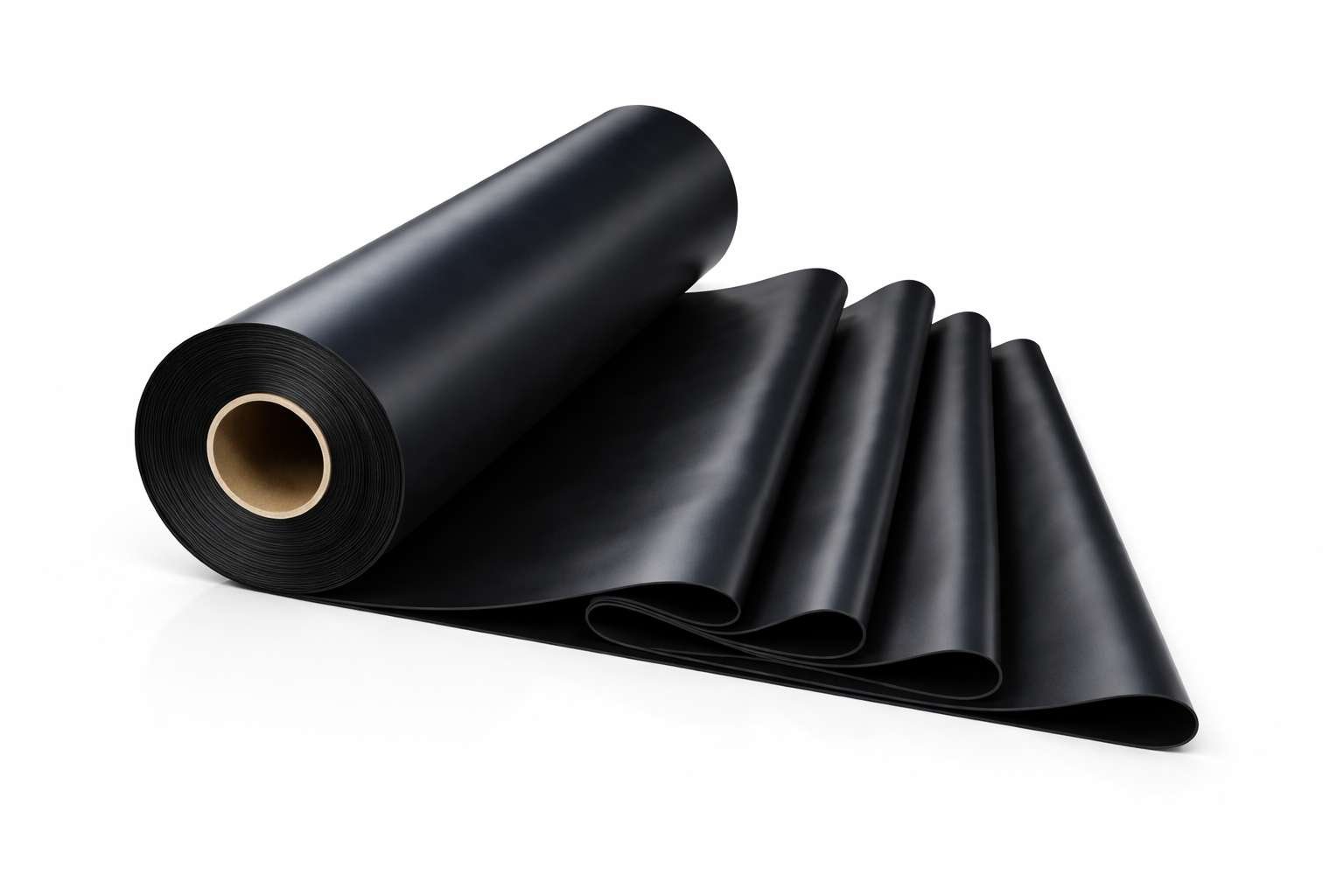
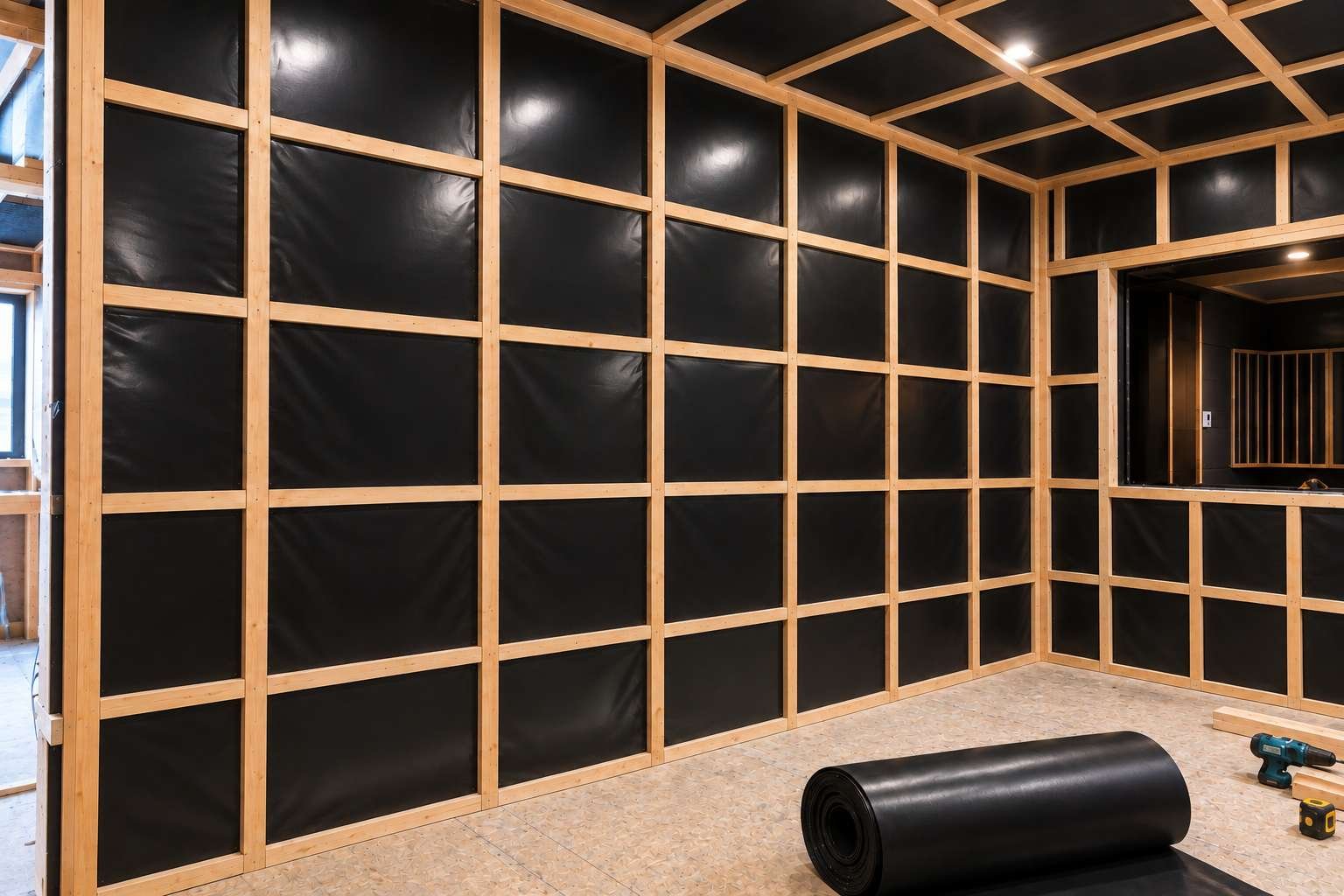
Dr. Acoustic Polyblock Membrane is a flexible, high-performance acoustic barrier designed to help reduce airborne sound transmission through walls, ceilings, floors, partitions, and other building assemblies. Its dense and resilient structure adds mass to the construction, helping block unwanted noise and improve overall sound insulation. The membrane can be used as part of multilayer acoustic systems and is particularly effective where enhanced soundproofing is required without adding excessive thickness or weight. Easy to handle and install, Polyblock Membrane is suitable for residential, commercial, industrial, studio, auditorium, and home theatre applications.
Polyblock Membrane MLV for Soundproofing
Polyblock Membrane MLV is a sound-isolation material used in acoustic and building applications to help reduce the transmission of unwanted noise. Mass Loaded Vinyl (MLV) is commonly used as a sound barrier because its dense, flexible construction adds mass to walls, ceilings, partitions, and other suitable building assemblies.
At Dr. Acoustic, Polyblock Membrane is intended for soundproofing applications where improved noise control and sound isolation are required. When correctly incorporated into a complete construction system, a soundproofing membrane can help limit sound travelling between adjoining rooms and spaces.
Mass Loaded Vinyl for Walls and Ceilings
Mass Loaded Vinyl is used in selected wall and ceiling constructions to support sound transmission reduction. Its flexible format can make it suitable for applications where adding a sound barrier within an existing or new assembly is preferred.
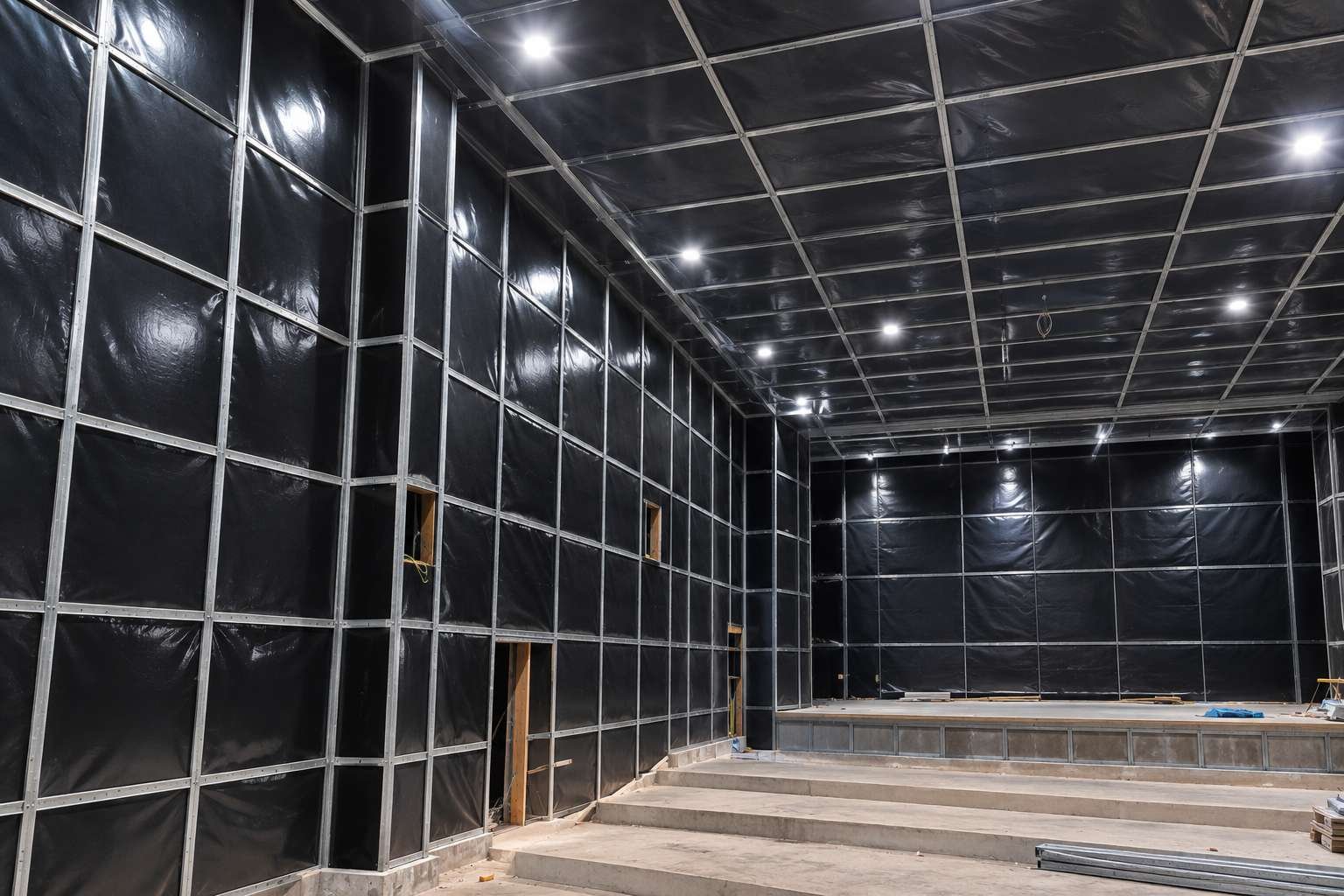
For walls, an MLV soundproofing membrane may be incorporated into a suitable partition system to help reduce airborne noise travelling between rooms. For ceilings, it may be used as part of a designed assembly to address sound transmission between floors or adjoining areas. The overall result depends on the surrounding construction, sealing, installation quality, and other sound-control materials used.
A soundproofing membrane should not be treated as a complete solution on its own. Gaps, joints, doors, windows, structural connections, and other weak points can affect the performance of the entire system.
Polyblock Membrane for Studios, Home Theatres, and Commercial Spaces
Sound isolation is important in recording studios, home theatres, offices, conference rooms, auditoriums, and other spaces where noise transfer needs to be controlled.
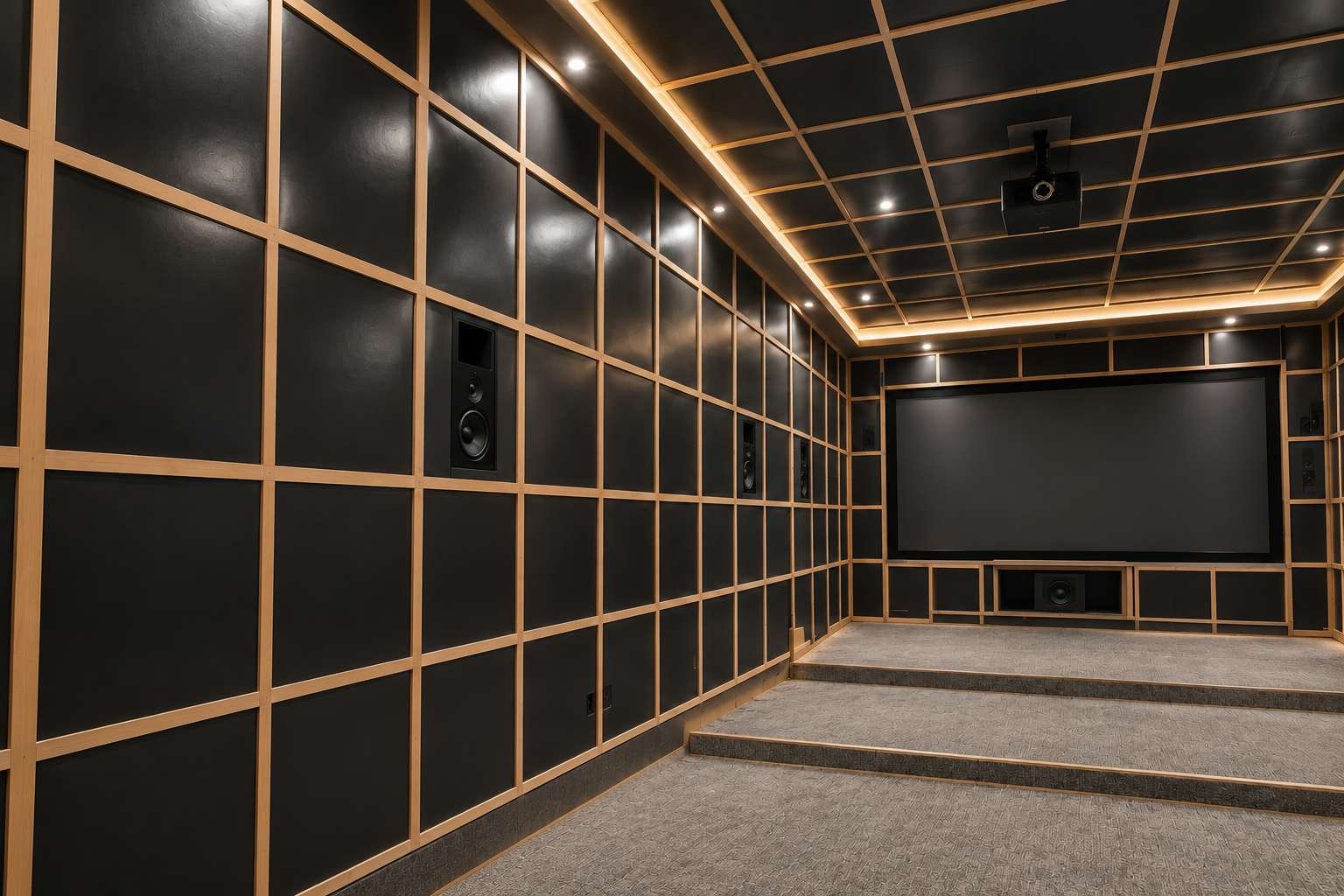
In a recording studio, Mass Loaded Vinyl may be incorporated into a wall or ceiling assembly as part of a broader soundproofing design. In a home theatre, it may help limit sound travelling into neighbouring rooms when combined with appropriate construction and sealing. Offices and commercial buildings may also use sound-isolation membranes in selected partitions where greater acoustic separation is required.
For auditorium and specialised acoustic projects, the correct system depends on the building structure, the source of noise, and the required level of isolation. Internal echo and reverberation may also need separate acoustic treatment using suitable sound-absorbing materials.
Understanding MLV Soundproofing
Mass Loaded Vinyl is primarily used to add mass to a construction and help control sound transmission. This differs from sound-absorbing materials, which are designed mainly to reduce reflections and reverberation inside a room.
When selecting Polyblock Membrane MLV, consider the intended application, compatibility with other building materials, installation requirements, and available product documentation. A properly designed wall, ceiling, or floor assembly is essential for achieving meaningful sound-isolation results.
Dr. Acoustic offers acoustic and soundproofing solutions for residential and commercial applications. Contact our team to discuss your project and identify a suitable approach for your sound-control requirements.
Frequently Asked Questions About Polyblock Membrane MLV
1. What is Polyblock Membrane MLV?
Polyblock Membrane MLV is presented as a sound-isolation membrane for acoustic and building applications. MLV stands for Mass Loaded Vinyl, a dense material commonly used in soundproofing assemblies to help reduce sound transmission. Confirm the exact composition of your Polyblock product against its product documentation.
2. What is Mass Loaded Vinyl used for?
Mass Loaded Vinyl is commonly used as a sound barrier within suitable wall, ceiling, partition, and selected floor assemblies. Its purpose is to help reduce sound transmission when incorporated into a properly designed construction.
3. Can Polyblock Membrane be used for walls and ceilings?
Suitable sound-isolation membranes can be incorporated into wall and ceiling systems. The installation method should match the product requirements and the design of the complete assembly.
4. Is MLV suitable for recording studios and home theatres?
MLV may be used as one component of a soundproofing system for recording studios and home theatres. Other measures, such as sealing gaps and designing appropriate wall or ceiling assemblies, may also be needed to control sound transmission.
5. Does Mass Loaded Vinyl absorb sound?
Mass Loaded Vinyl is primarily used to help reduce sound transmission by adding mass to a construction. It is not the same as a porous sound-absorbing panel used to control echo and reverberation within a room.
6. What is the difference between an acoustic barrier membrane and a sound-absorbing material?
An acoustic barrier membrane is used to help limit sound passing through a construction. A sound-absorbing material is designed mainly to reduce reflected sound within a space. Some projects require both sound isolation and internal acoustic treatment.
7. What affects Polyblock Membrane MLV price?
The price may depend on the product’s composition, thickness, dimensions, quantity, and delivery location. Contact Dr. Acoustic for current pricing and product availability based on your project requirements.
Find the Right Soundproofing Membrane for Your Project
Choosing a suitable soundproofing membrane begins with understanding the source of the noise and the construction through which it travels. Whether you are planning a recording studio, home theatre, office, auditorium, or commercial partition, Polyblock Membrane MLV may form part of a complete sound-isolation solution.
Contact Dr. Acoustic to discuss your application, product requirements, and suitable soundproofing options.